Site & context
- Project location and available area
- Existing surveys, records, utilities, and access
- Known water sources and site constraints
Aton Agri Services · English presentation
A controlled technical sequence from investigation and engineering through commissioning and support.
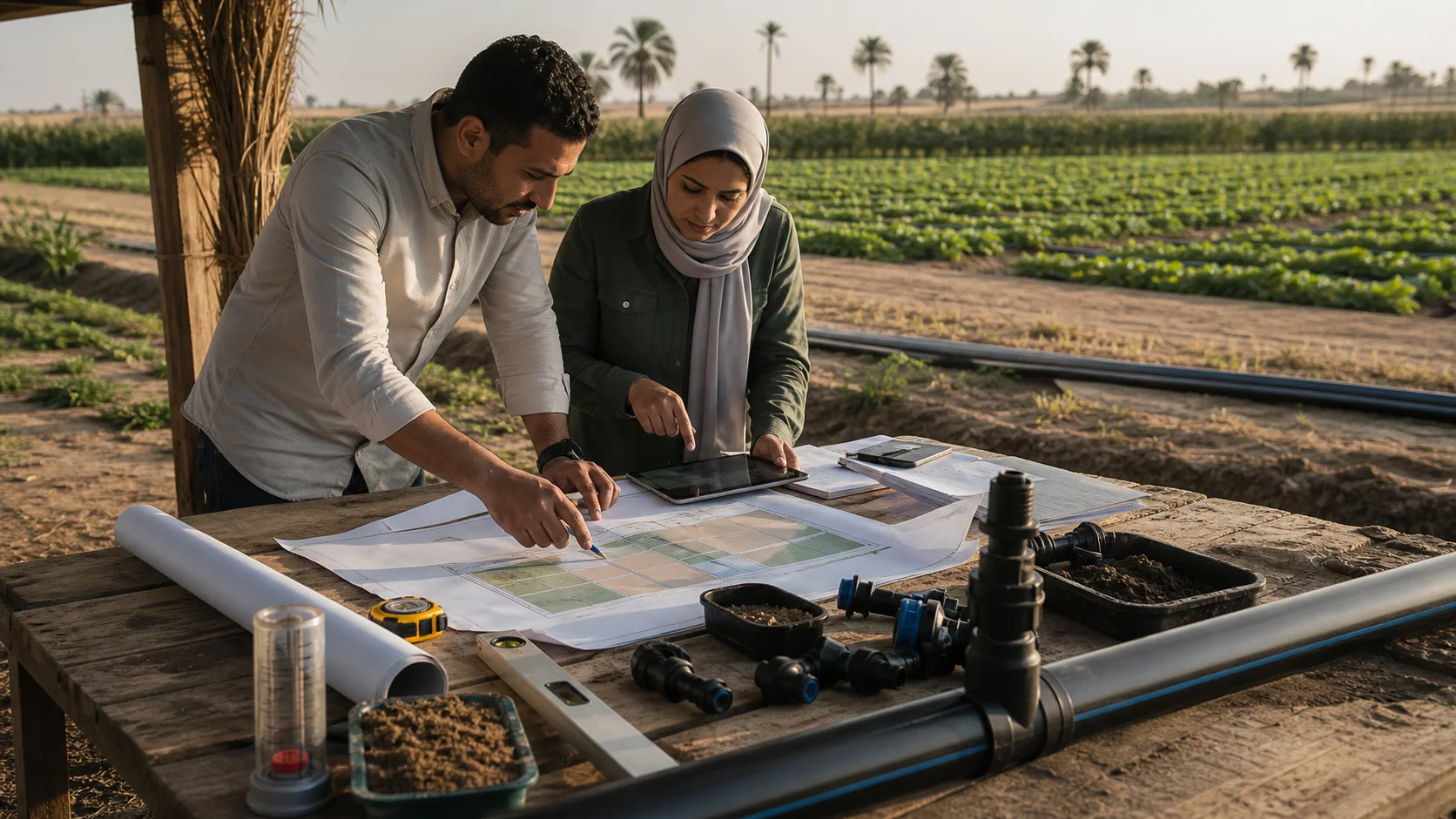
Delivery method
Illustrative workflow content for presentation. Adapt the sequence and deliverables to the approved company procedure before launch.
Before engineering begins
Early clarity helps the technical team connect agricultural objectives with water, energy, access, structures, construction constraints, and day-to-day operation.
Delivery sequence
Each phase resolves a different project question and prepares clear information for the work that follows.
Phase 01
The team reviews the site, objectives, available records, water and energy sources, access, interfaces, and operating constraints.
Indicative outputs
Phase 02
Design criteria are translated into coordinated concepts, quantities, scope boundaries, sequencing assumptions, and review points.
Indicative outputs
Phase 03
Activities are coordinated against approved priorities with inspection points, progress records, issue tracking, and practical field decisions.
Indicative outputs
Phase 04
Systems are inspected, tested, documented, handed over, and reviewed with the people responsible for everyday operation.
Indicative outputs

Field control
The purpose of project control is not paperwork for its own sake. It is to make responsibilities, changes, inspections, and next actions easier to understand.
Agree what each technical package includes, excludes, and connects to.
Capture progress, conditions, inspections, and issues close to where work happens.
Pause at defined checks before concealed or dependent work proceeds.
Record why a field decision changed and which drawings, quantities, or teams it affects.
Operating handover
A practical handover package gives the operating team a clear starting point for use, maintenance, follow-up, and future development.
Working relationship
Confirms priorities, decisions, approvals, and the operating outcome.
Coordinates criteria, interfaces, technical reviews, and design decisions.
Connects the work plan with access, sequencing, inspections, and daily conditions.
Resolve discipline-specific requirements and support testing and handover.
Next step
Tell us about the site, systems, and stage of your project. We will help organize the next technical step.
Plan a technical consultation